Introduction of Chuan Niu Xi: Medicinal Cyathula Root
✵This article documents the herb Medicinal Cyathula Root—including its English name, Latin name, Pinyin name, properties and flavor—and describes its botanical source: (1) Cyathula officinalis Kuan., with detailed accounts of its botanical features, growth characteristics, ecological environment, macroscopic and microscopic herb characteristics, pharmacological actions, medicinal efficacy, and administration guidelines.
Radix Cyathulae (Medicinal Cyathula Root)
Pinyin Name: Chuān Niú Xī
English Name: Medicinal Cyathula Root
Latin Name:Radix Cyathulae Properties and Flavor: Warm; pungent and sweet.
Brief Introduction:Radix Cyathulae is the dried root of Cyathula officinalis Kuan. It is used (1) to invigorate blood and dispel stasis for treating amenorrhea, dysmenorrhea, and traumatic injuries; (2) to tonify the liver and kidney and strengthen tendons and bones for low back pain and arthralgia; and (3) to direct fire and blood downward for headache, epistaxis, and hematemesis. It is commonly known as Radix Cyathulae, Medicinal Cyathula Root, or Chuān Niú Xī.
Botanical Source: Herbal classical works define Radix Cyathulae (Medicinal Cyathula Root) as the dried root of Cyathula officinalis Kuan. It is a species of the genus Cyathula Blume, family Amaranthaceae (amaranth family), order Caryophyllales. This commonly used species is described below:
(1) Cyathula officinalis Kuan.
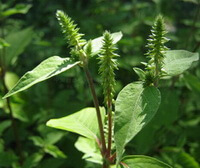
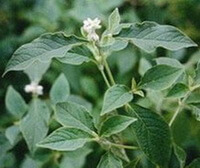
Botanical Description:Cyathula officinalis Kuan is a perennial herb of the Amaranthaceae family and the genus Cyathula. It is also known as Cyathula capitata auct. non Moq. or Cyathula tomentosa auct. non (Roth) Moq. Common names include Chuān Niú Xī, Tiān Niú Xī, Sweet Oxknee Root, Máo Yào, and Hóng Máo Yào. The plant grows 40–100 cm tall. The taproot is cylindrical, with an off-white bark and a diameter of 0.8–1.5 cm. The stem is slightly quadrangular, much-branched, and sparsely covered with long, coarse hairs; the lower portion is nearly cylindrical, while the middle portion is nearly prismatic. Leaves are opposite; petioles measure 5–15 cm; leaf blades are elliptic or narrowly elliptic (rarely obovate), 3–12 cm long and 1.5–5.5 cm wide; the apex is acuminate or caudate, the base is cuneate or broadly cuneate, margins are entire; the upper surface bears adnate long coarse hairs, while the lower surface is densely hairy.
Compound cymes are densely aggregated into globose inflorescences (1–1.5 cm in diameter), viridescent (pea-green) when fresh and turning whitish upon drying. These globose inflorescences are decussately arranged on the terminal branches of the inflorescence axis, either stipitate or spaced 2–3 cm apart. Each compound cyme is 3–6-rayed and divaricate. Flowers are hermaphroditic, with the fertile flower centrally positioned and sterile flowers flanking it. Bracts are ovate (egg-shaped), 4–5 mm long, bright and glossy, with an awn-shaped (spiny-tipped) or uncinate (falcate) apex. The tepals of sterile flowers become hardened, rigid, hamulate awns. Hermaphroditic flowers measure 3–5 mm in length; their tepals are lanceolate with awn-shaped (thorn-tipped) apices; the three inner tepals are narrower. Nodular fascicular hairs densely cover the filament bases. The staminode is rectangular, 0.3–0.4 mm long and approximately half as wide as long, with a dentate-lobed apex. The ovary is terete or obovate, 1.3–1.8 mm long; the style is ~1.5 mm long, persistent; the stigma is capitate.
Utricles (utriculi) are elliptic or obovate, 2–3 mm long and 1–2 mm in diameter, primrose yellow (pale yellow), enclosed within the persistent perianth. Seeds are elliptic and lentoid, 1.5–2 mm long, reddish, glossy, and bright. Flowering occurs from June to July; fruiting, from August to September.
Ecological Environment:Cyathula officinalis Kuan grows wild at forest margins, in grasslands, or under cultivation, typically at elevations above 500 m.
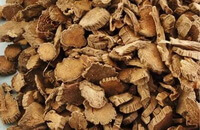
Characteristics of the Herb: The root is cylindrical or subcylindrical (nearly cylindrical), slightly curved or twisted, occasionally branched, 25–60 cm long and 0.5–3 cm in diameter. The surface is yellowish-brown or taupe (dust-colored), bearing slightly twisted longitudinal wrinkles, lateral root scars, and conspicuous elongated, protuberant lenticels. The upper portion often retains woody rhizome remnants. The texture is tough (pliable yet resilient) and not easily broken. The fracture surface is pale yellow or brown, with punctate vascular bundles arranged intermittently in several concentric rings. The herb has a faint odor and a sweet taste.
Pharmacological Actions: (1) promotion of protein synthesis; (2) anti-fertility effect; (3) estrogenic activity.
Medicinal efficacy: Invigorates blood circulation and dispels blood stasis to regulate menstruation; dispels wind-dampness; promotes diuresis and alleviates stranguria; unblocks meridians and eases joint mobility. It is indicated for amenorrhea, abdominal masses, rheumatic low back and leg pain, foot paralysis and spasm, dystocia, retained placenta, dysmenorrhea, hematuric stranguria, pyretic (heat-induced) stranguria, urolithiasis-associated stranguria, rheumatic arthralgia, and traumatic injuries.
Administration of Radix Cyathulae (Chuān Niú Xī):
Reference:
Administration Guide for Radix Cyathulae (Chuān Niú Xī)
TCM Books:
(1) Internally: 5–10 grams; (2) Internally: water decoction, 1.5–3 qian (≈4.5–9 grams); infusion in wine; or preparation as pills or powder; (3) Internally: water decoction, 6–10 grams; infusion in wine; or preparation as pills or powder.
Contraindications, Precautions, and Adverse Reactions: Radix Cyathulae should be used with caution during pregnancy and is contraindicated in pregnancy. It should be avoided in cases of menorrhagia (excessive menstruation), nocturnal emission, and spermatorrhea.
References:
1.Introduction of Chuan Niu Xi: Medicinal Cyathula Root

 ✵This article documents the herb Medicinal Cyathula Root—including its English name, Latin name, Pinyin name, properties and flavor—and describes its botanical source: (1) Cyathula officinalis Kuan., with detailed accounts of its botanical features, growth characteristics, ecological environment, macroscopic and microscopic herb characteristics, pharmacological actions, medicinal efficacy, and administration guidelines.
 Pinyin Name: Chuān Niú Xī
 Botanical Description: Cyathula officinalis Kuan is a perennial herb of the Amaranthaceae family and the genus Cyathula. It is also known as Cyathula capitata auct. non Moq. or Cyathula tomentosa auct. non (Roth) Moq. Common names include Chuān Niú Xī, Tiān Niú Xī, Sweet Oxknee Root, Máo Yào, and Hóng Máo Yào. The plant grows 40–100 cm tall. The taproot is cylindrical, with an off-white bark and a diameter of 0.8–1.5 cm. The stem is slightly quadrangular, much-branched, and sparsely covered with long, coarse hairs; the lower portion is nearly cylindrical, while the middle portion is nearly prismatic. Leaves are opposite; petioles measure 5–15 cm; leaf blades are elliptic or narrowly elliptic (rarely obovate), 3–12 cm long and 1.5–5.5 cm wide; the apex is acuminate or caudate, the base is cuneate or broadly cuneate, margins are entire; the upper surface bears adnate long coarse hairs, while the lower surface is densely hairy.
 Compound cymes are densely aggregated into globose inflorescences (1–1.5 cm in diameter), viridescent (pea-green) when fresh and turning whitish upon drying. These globose inflorescences are decussately arranged on the terminal branches of the inflorescence axis, either stipitate or spaced 2–3 cm apart. Each compound cyme is 3–6-rayed and divaricate. Flowers are hermaphroditic, with the fertile flower centrally positioned and sterile flowers flanking it. Bracts are ovate (egg-shaped), 4–5 mm long, bright and glossy, with an awn-shaped (spiny-tipped) or uncinate (falcate) apex. The tepals of sterile flowers become hardened, rigid, hamulate awns. Hermaphroditic flowers measure 3–5 mm in length; their tepals are lanceolate with awn-shaped (thorn-tipped) apices; the three inner tepals are narrower. Nodular fascicular hairs densely cover the filament bases. The staminode is rectangular, 0.3–0.4 mm long and approximately half as wide as long, with a dentate-lobed apex. The ovary is terete or obovate, 1.3–1.8 mm long; the style is ~1.5 mm long, persistent; the stigma is capitate.
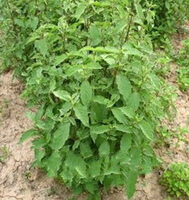 Ecological Environment: Cyathula officinalis Kuan grows wild at forest margins, in grasslands, or under cultivation, typically at elevations above 500 m.
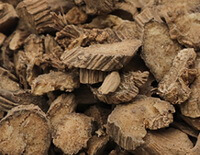 Characteristics of the Herb: The root is cylindrical or subcylindrical (nearly cylindrical), slightly curved or twisted, occasionally branched, 25–60 cm long and 0.5–3 cm in diameter. The surface is yellowish-brown or taupe (dust-colored), bearing slightly twisted longitudinal wrinkles, lateral root scars, and conspicuous elongated, protuberant lenticels. The upper portion often retains woody rhizome remnants. The texture is tough (pliable yet resilient) and not easily broken. The fracture surface is pale yellow or brown, with punctate vascular bundles arranged intermittently in several concentric rings. The herb has a faint odor and a sweet taste.
