Introduction of Mǎ Biān Cǎo: European Verbena Herb
✵The article documents the herb European Verbena Herb—its English name, Latin name, Pinyin name, properties and flavor, botanical source—a single plant species: Verbena officinalis L.—and provides a detailed introduction to its botanical features, growth characteristics, ecological environment, herbal characteristics, pharmacological actions, medicinal efficacy, and administration guidelines.
Herba Verbenae (European Verbena Herb)
Pinyin Name: Mǎ Biān Cǎo
English Name: European Verbena Herb
Latin Name:Herba Verbenae Properties and Flavor: cool, bitter
Brief Introduction:Herba Verbenae is the dried aerial part of Verbena officinalis L., used (1) to invigorate blood circulation and promote menstruation for treating amenorrhea and dysmenorrhea; (2) as an antimalarial agent for malarial splenomegaly; and (3) to clear heat and detoxify, for treating boils and other suppurative inflammations. It is commonly known as Herba Verbenae, European Verbena Herb, and Mǎ Biān Cǎo.
Botanical Source: Classical herbal works define Herba Verbenae as the whole herb of Verbena officinalis L., a species belonging to the Verbenaceae family (verbena or vervain family), genus Verbena L., order Lamiales. This widely used species is described below:
(1) Verbena officinalis L.
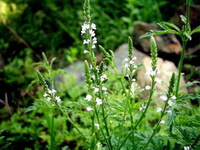
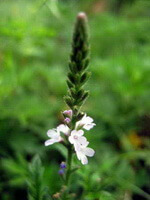
Botanical Description:Verbena officinalis L. is a perennial herb of the Verbenaceae family and genus Verbena L. It is commonly known as Tù Zǐ Cǎo (“Rabbit Grass”). Plants grow 30–120 cm tall. The stem is quadrangular, with hirsute hairs at the nodes and along the branches. Leaves are opposite; leaf blades are oval (egg-shaped), obovate to oblong-lanceolate, 2–8 cm long and 1–5 cm wide. Basal leaves have coarsely serrated and incised margins; cauline leaves are mostly trilobed, with irregularly serrated lobe margins; both surfaces are hirsute.
The inflorescence is terminal and axillary, slender and delicate, up to 25 cm long. Flowers are small and densely arranged in the early flowering stage, becoming more spaced during fruiting. Each flower bears one bract covered with coarse hairs. The calyx is fistulose (tubular), membranous, with five ridges and five teeth. The corolla is mauve (lilac) to blue; the corolla tube is straight or slightly curved, and the apex is five-lobed, with oblong lobes. There are four stamens, inserted at the middle of the corolla tube; filaments are short.
The fruit is oblong, approximately 2 mm long, enclosed by the persistent calyx, and splits into four mericarps when mature. Flowering occurs from June to August; fruiting from July to September.
Ecological Environment:Verbena officinalis L. grows on hillsides and mountain slopes, along roadsides and stream banks, at forest edges, and in sunny pastures. It is widely distributed across temperate and subtropical regions worldwide.
History story of Verbena officinalis: Historical Notes on Verbena officinalis: The name “vervain” derives from the Celtic ferfaen, combining fer (“to drive away”) and faen (“stone”), reflecting its traditional use for urinary affections—especially bladder stones. Some authors instead derive it from Herba veneris, alluding to its reputed aphrodisiac properties in antiquity. Priests employed it in sacrifices, earning it the name Herba Sacra (“sacred herb”). In classical Roman usage, verbena referred broadly to “altar-plants,” especially this species. The Druids [1]—included it in their lustral (purifying) waters; magicians and sorcerers also used it extensively. It featured in rites, incantations, and diplomatic ceremonies, such as treaty-making. Bruised and worn around the neck, it was believed to prevent headaches and protect against snakebites and other venomous stings, as well as confer general good fortune. It was also thought beneficial for vision. Many of these attributed virtues may stem from the medieval legend that the plant was discovered on Mount Calvary, where it stemmed the wounds of the crucified Christ. Hence, it is traditionally gathered before flowering, cross-blessed with a commemorative verse, and promptly dried.
This plant was a favorite of the Druids, who gathered vervain when the Dog Star, Sirius, was rising, during the dark of the Moon. The Druids used vervain in divination, consecration, and ritual cleansing of sacred spaces. They made a magical drink called the Cauldron of Cerridwen—a shapeshifter—some say containing rowan berries, seawater, lesser celandine, flixweed, and vervain, which bestowed creative energy for bardic song and prophecy upon the drinker; a drink made from vervain is still said to aid poets in their work. Vervain is still used to prepare a ceremonial infusion for initiation into Druidic paths. It has a pleasant aroma and can be consumed as tea or burned as incense. In its association with the Underworld, it is said that the herb may be added to a cup of wine drunk on Samhain to facilitate contact with the Beloved Dead.
In Christianity, verbena is regarded as a sacred flower and is often used to decorate altars in religious ceremonies. In the past, when people believed diseases were caused by witchcraft, vervain was sometimes placed at the head of patients’ beds to break the spell. In ancient Europe, it was esteemed as a precious sacred herb and symbolized peace in religious celebrations. In literary and artistic works, the herb was described as having a restraining effect on vampires.[2].
Growth Characteristics:Verbena officinalis L. prefers a dry, sunny environment. Its soil requirements are not strict.
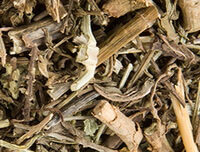
Characteristics of the Herb: The whole plant includes roots. The rhizome is cylindrical. Stems are square, 0.2–0.4 cm in diameter; the surface is celadon (sage-green) to yellow-green, coarse and rough, with longitudinal grooves; the texture is hard and brittle, breaking easily, with a fibrous fracture surface and white pith in the center—or the center is hollow. Leaves are opposite, sage-green (grayish-green) or yellowish-brown, mostly withered and fragmented, and pilose; intact leaf blades are oval (egg-shaped) to oblong, pinnately divided or three-parted. The inflorescence is a slender, elongated spike, with florets densely and closely arranged; some show visible yellow-brown corollas, and some have already formed fruiting spikes. The fruit is enclosed in a persistent celadon calyx, and the nutlets are sallow (grayish-yellow), about 0.2 cm long, with longitudinal ridges on the dorsal surface visible under a magnifying glass. The herb has a slight odor and tastes slightly bitter or slightly astringent.
Medicinal Efficacy: Promotes blood circulation, resolves blood stasis, regulates menstruation, clears heat, detoxifies, alleviates edema, reduces swelling, resolves jaundice, and prevents malaria attacks or recurrence. It is indicated for abdominal masses and accumulations, dysmenorrhea (abdominal pain after menstruation), amenorrhea due to blood stasis, fever caused by exogenous pathogens, common cold with fever, damp-heat jaundice, sore throat, pharyngitis, ulcerative gingivitis, gum swelling and pain, edema, dysuria, carbuncles, ulcers, swellings, dysentery, malaria, diphtheria, gonorrhea, and traumatic injuries.
The flowering stems are used medicinally. Their constituents include the glycosides verbenalin and verbenin, tannins, an essential oil, mucilage, saponins, and mineral compounds. These substances confer on vervain astringent, diuretic, stomachic, tonic, diaphoretic, antispasmodic, vulnerary, mild sedative, and hypnotic properties. It is used internally as an infusion for various disorders affecting the stomach, liver, and kidneys. It is also effective for stimulating metabolism, treating general nervous exhaustion, insomnia, and migraine. Externally, vervain is used in gargles, compresses, and bath preparations for skin disorders. A tincture prepared from the fresh plant is used in homeopathy.
Verbena has a refreshing and pleasant aroma, is used as a raw material for cosmetics and perfumes, and is commonly brewed as tea, making it one of the popular herbal teas. It is also a nutrient-rich food that promotes blood circulation and resolves blood stasis.
Administration of Herba Verbenae (Mǎ Biān Cǎo):
Reference:
Administration Guide for Herba Verbenae (Mǎ Biān Cǎo)
TCM Books:
(1) Internally: 5–10 grams; (2) Internally: water decoction, 0.5–1 liang (≈15–30 grams)); fresh herb, juice extract, 1–2 liang (≈30–60 grams); or prepared as pills or powder. External use: crush and apply topically, or wash with water decoction; (3) Internally: water decoction, 15–30 grams; fresh herb, 30–60 grams; or prepared as pills or powder. External use: appropriate amount—crush and apply topically, or wash with water decoction.
Contraindications, Precautions, and Adverse Reactions: Herba Verbenae should be used with caution during pregnancy.
Explanatory Notes:
1. Druid, members of the learned class among the ancient Celts, serving as priests, teachers, and judges.
2. Vampires: In popular legend, a vampire is a creature—also known as a vampyre—that has appeared in the folklore and fiction of various cultures for hundreds of years, predominantly in Europe, although belief in them has waned in modern times. Vampire superstition thrived in the Middle Ages, especially as the plague decimated entire towns.
References:
1.Introduction of Mǎ Biān Cǎo: European Verbena Herb

 ✵The article documents the herb European Verbena Herb—its English name, Latin name, Pinyin name, properties and flavor, botanical source—a single plant species: Verbena officinalis L.—and provides a detailed introduction to its botanical features, growth characteristics, ecological environment, herbal characteristics, pharmacological actions, medicinal efficacy, and administration guidelines.
 Pinyin Name: Mǎ Biān Cǎo
 Botanical Description: Verbena officinalis L. is a perennial herb of the Verbenaceae family and genus Verbena L. It is commonly known as Tù Zǐ Cǎo (“Rabbit Grass”). Plants grow 30–120 cm tall. The stem is quadrangular, with hirsute hairs at the nodes and along the branches. Leaves are opposite; leaf blades are oval (egg-shaped), obovate to oblong-lanceolate, 2–8 cm long and 1–5 cm wide. Basal leaves have coarsely serrated and incised margins; cauline leaves are mostly trilobed, with irregularly serrated lobe margins; both surfaces are hirsute.
 Ecological Environment: Verbena officinalis L. grows on hillsides and mountain slopes, along roadsides and stream banks, at forest edges, and in sunny pastures. It is widely distributed across temperate and subtropical regions worldwide.
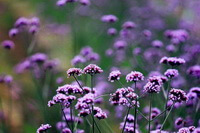 This plant was a favorite of the Druids, who gathered vervain when the Dog Star, Sirius, was rising, during the dark of the Moon. The Druids used vervain in divination, consecration, and ritual cleansing of sacred spaces. They made a magical drink called the Cauldron of Cerridwen—a shapeshifter—some say containing rowan berries, seawater, lesser celandine, flixweed, and vervain, which bestowed creative energy for bardic song and prophecy upon the drinker; a drink made from vervain is still said to aid poets in their work. Vervain is still used to prepare a ceremonial infusion for initiation into Druidic paths. It has a pleasant aroma and can be consumed as tea or burned as incense. In its association with the Underworld, it is said that the herb may be added to a cup of wine drunk on Samhain to facilitate contact with the Beloved Dead.
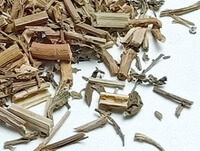 Characteristics of the Herb: The whole plant includes roots. The rhizome is cylindrical. Stems are square, 0.2–0.4 cm in diameter; the surface is celadon (sage-green) to yellow-green, coarse and rough, with longitudinal grooves; the texture is hard and brittle, breaking easily, with a fibrous fracture surface and white pith in the center—or the center is hollow. Leaves are opposite, sage-green (grayish-green) or yellowish-brown, mostly withered and fragmented, and pilose; intact leaf blades are oval (egg-shaped) to oblong, pinnately divided or three-parted. The inflorescence is a slender, elongated spike, with florets densely and closely arranged; some show visible yellow-brown corollas, and some have already formed fruiting spikes. The fruit is enclosed in a persistent celadon calyx, and the nutlets are sallow (grayish-yellow), about 0.2 cm long, with longitudinal ridges on the dorsal surface visible under a magnifying glass. The herb has a slight odor and tastes slightly bitter or slightly astringent.
