✵This article documents the herb Ground Beetle, including its English name, Latin name, Pinyin name, properties and flavors, and botanical origin—two insect species: (1) Eupolyphaga sinensis Walker and (2) Steleophaga plancyi (Bol.). It provides a detailed description of the botanical characteristics, growth habits, and ecological environments of these two species, as well as the macroscopic features of the crude drug, its pharmacological actions, medicinal efficacy, and administration guidelines.
Eupolyphaga seu Steleophaga (Ground Beetle)
Pinyin Name: Tǔ Biē Chóng, Tǔ Yuán, Zhè Chóng, Dì Biē, or Dì Wū Guī
English Name: Ground Beetle
Latin Name:Eupolyphaga seu Steleophaga Properties and Flavor: Cold, salty, slightly toxic
Brief Introduction:Eupolyphaga seu Steleophaga is the dried whole body of the female insect of Eupolyphaga sinensis Walker or Steleophaga plancyi (Bol.). It is used (1) to break blood stasis for treating amenorrhea and gynecological masses, and (2) to promote bone fracture healing. Commonly known names include Eupolyphaga seu Steleophaga, Ground Beetle, Zhè Chóng, and Tǔ Biē Chóng.
Source: Classical herbal works define Eupolyphaga seu Steleophaga (Ground Beetle) as the dried whole body of the female insect of (1) Eupolyphaga sinensis Walker and (2) Steleophaga plancyi (Bol.). These insects belong to the family Corydiidae (formerly classified under Blattaria; current taxonomy places them in order Blattodea), subfamily Corydiinae. The two commonly used species are described below:
(1) Eupolyphaga sinensis Walker
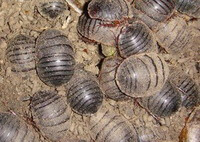
Description:Eupolyphaga sinensis Walker is commonly known as Dì Biē (“soil-dwelling soft-shelled turtle”) or Dì Wū Guī (“soil-dwelling turtle”), Tǔ Yuán, or Ground Turtle. It exhibits sexual dimorphism and undergoes incomplete metamorphosis: males possess wings, whereas females are apterous. The body is oval-shaped, measuring 1.3–3 cm in length and 1.2–2.4 cm in width. The female is approximately 3 cm long, dorsoventrally flattened, blackish and glossy. The anterior end is narrower, the posterior end is broader; the dorsal surface is purplish-brown, glossy, and wingless. The pronotum is well-developed and covers the head; the tergites of the abdomen consist of nine segments arranged in an imbricated pattern. The ventral surface is reddish-brown; the head is small and bent ventrally toward the abdomen; it bears one pair of filiform antennae, which are often broken off; and three pairs of thoracic legs, covered with fine hairs and spines. Transverse annuli are present on the abdomen. The insect is crisp and fragile, with a fishy odor and a slightly salty taste.
Life Habits:Eupolyphaga sinensis is an important medicinal insect. It inhabits dark, moist, humus-rich sandy soils and is frequently found in grain stores or shaded, damp oil mills. It avoids sunlight, remaining hidden during the day and active at night.
The life cycle comprises three stages: egg, nymph, and adult. Males develop wings approximately 8 months after hatching from nymphs; females mature into apterous adults in 9–11 months. Males die 5–7 days after mating. Females lay eggs once in their lifetime, typically within one week post-mating.
Distribution: This insect is native to regions near rivers and lakes in China.
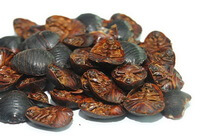
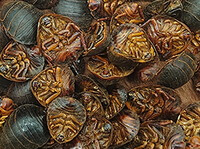
Herb Characteristics: Ground Beetle: The dried insect is flat and oval, 1.3–3 cm long and 1.2–2.4 cm wide. The anterior end is narrow, the posterior end is broad; the dorsal surface is purplish-brown, glossy, and wingless. The pronotum is well-developed and covers the head; the abdominal tergites comprise nine imbricated segments. The ventral surface is reddish-brown; the head is small, bearing one pair of filiform antennae (often broken off); the thorax bears three pairs of legs covered with fine hairs and spines. Transverse annuli are visible on the abdomen. The texture is brittle and easily fragmented. It has a fishy odor and a slightly salty taste.
Pharmacological Actions: (1) Enhances myocardial and cerebral tolerance to ischemia; (2) Reduces total cholesterol and prevents atherosclerosis; (3) Inhibits platelet aggregation; (4) Exerts antithrombotic effects.
Medicinal efficacy: Breaks blood stasis and promotes blood circulation; facilitates tendon and bone regeneration. It is indicated for traumatic injuries with blood stasis—such as contusions, sprains, tendon and muscle injuries, and fractures—as well as amenorrhea due to blood stasis, postpartum abdominal pain caused by blood stasis, abdominal masses, rigid or swollen tongue, sublingual swelling (“double tongue”, i.e., inflammation of sublingual soft tissues), etc.
Administration of Eupolyphaga seu Steleophaga (Tǔ Biē Chóng):
Reference:
Administration Guide for Eupolyphaga seu Steleophaga (Tǔ Biē Chóng)
TCM Books:
(1) Internally: 3–10 grams; (2) Oral administration: water decoction, 0.5–2 qián (approximately 1.5–6 grams), or prepared as pills or powder; (3) Internally: water decoction, 3–10 grams; infused in wine and taken orally; or ground into fine powder, 1–1.5 grams per dose. External use: appropriate amount—used as a mouthwash with water decoction; applied topically as finely powdered herb; or crushed fresh herb applied as a poultice.
Contraindications, Precautions, and Adverse Reactions: Contraindicated during pregnancy.
(2) Steleophaga plancyi (Boleny)
Description:Steleophaga plancyi (Boleny) is also known as Steleophaga plancyi Boleny and commonly referred to as Jì Dì Biē. Only males possess wings; females are apterous. The male measures approximately 2.2 cm in length. The female is 3.0–3.6 cm long, broadly ovate, and wider than Eupolyphaga sinensis Walker. The body is dorsoventrally flattened; the head is small and curved ventrally; mouthparts are chewing type; mandibles are robust; antennae are filiform, elongated, and slightly clavate; compound eyes are well-developed; ocelli are two in number; the pronotum is expanded shield-like, narrow anteriorly and broad posteriorly. In males, the pronotum is undulated with lacunae; two pairs of wings are present—leathery tegmina (forewings) and membranous hindwings—which fold fanwise at rest; locomotion is primarily by walking, with flight rare. The first abdominal sternite is extremely short; retinaculum veins are undeveloped; the eighth and ninth abdominal tergites are reduced, caudate, and terminate in a single pair of cerci. Male genitalia bear a pair of ventral spines on the ninth sternite; in females, the eighth and ninth sternites are concealed beneath the seventh. Genitalia are non-protruding. Three pairs of thoracic legs are equally developed, covered with fine hairs and spines; coxae are enlarged and partially cover the ventral thorax and abdomen. Each tarsus comprises five segments and terminates in two claws.
The dorsal surface is dark brown. In adult males, the anterior margin of the pronotum is arched; the submarginal veins of the forewings are distinctly branched; radial, medial, and cubital veins run longitudinally; prominent cross-veins interconnect these longitudinal veins. The anal region is relatively short.
Life Habits: It is nocturnal—remaining motionless and concealed during daylight hours and foraging at night. It inhabits natural microhabitats such as soil beneath tree roots, leaf litter under rocks, chaff piles in rice stores, damp corners of granaries or oil mills, kitchens, stove bases, and other humid locations.
Herb Characteristics: The dried insect is elliptical, measuring 2.2–3.7 cm in length and 1.4–2.5 cm in width. The dorsal surface is brownish-black (dark brown), often bearing yellowish-brown patches and black marginal spots.

 ✵This article documents the herb Ground Beetle, including its English name, Latin name, Pinyin name, properties and flavors, and botanical origin—two insect species: (1) Eupolyphaga sinensis Walker and (2) Steleophaga plancyi (Bol.). It provides a detailed description of the botanical characteristics, growth habits, and ecological environments of these two species, as well as the macroscopic features of the crude drug, its pharmacological actions, medicinal efficacy, and administration guidelines.
 Pinyin Name: Tǔ Biē Chóng, Tǔ Yuán, Zhè Chóng, Dì Biē, or Dì Wū Guī
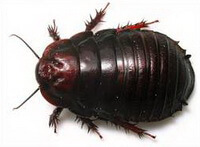 Description: Eupolyphaga sinensis Walker is commonly known as Dì Biē (“soil-dwelling soft-shelled turtle”) or Dì Wū Guī (“soil-dwelling turtle”), Tǔ Yuán, or Ground Turtle. It exhibits sexual dimorphism and undergoes incomplete metamorphosis: males possess wings, whereas females are apterous. The body is oval-shaped, measuring 1.3–3 cm in length and 1.2–2.4 cm in width. The female is approximately 3 cm long, dorsoventrally flattened, blackish and glossy. The anterior end is narrower, the posterior end is broader; the dorsal surface is purplish-brown, glossy, and wingless. The pronotum is well-developed and covers the head; the tergites of the abdomen consist of nine segments arranged in an imbricated pattern. The ventral surface is reddish-brown; the head is small and bent ventrally toward the abdomen; it bears one pair of filiform antennae, which are often broken off; and three pairs of thoracic legs, covered with fine hairs and spines. Transverse annuli are present on the abdomen. The insect is crisp and fragile, with a fishy odor and a slightly salty taste.
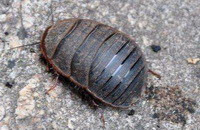 Life Habits: Eupolyphaga sinensis is an important medicinal insect. It inhabits dark, moist, humus-rich sandy soils and is frequently found in grain stores or shaded, damp oil mills. It avoids sunlight, remaining hidden during the day and active at night.
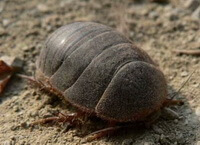 The life cycle comprises three stages: egg, nymph, and adult. Males develop wings approximately 8 months after hatching from nymphs; females mature into apterous adults in 9–11 months. Males die 5–7 days after mating. Females lay eggs once in their lifetime, typically within one week post-mating.
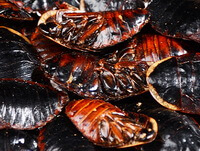 Herb Characteristics: Ground Beetle: The dried insect is flat and oval, 1.3–3 cm long and 1.2–2.4 cm wide. The anterior end is narrow, the posterior end is broad; the dorsal surface is purplish-brown, glossy, and wingless. The pronotum is well-developed and covers the head; the abdominal tergites comprise nine imbricated segments. The ventral surface is reddish-brown; the head is small, bearing one pair of filiform antennae (often broken off); the thorax bears three pairs of legs covered with fine hairs and spines. Transverse annuli are visible on the abdomen. The texture is brittle and easily fragmented. It has a fishy odor and a slightly salty taste.
 Pharmacological Actions: (1) Enhances myocardial and cerebral tolerance to ischemia; (2) Reduces total cholesterol and prevents atherosclerosis; (3) Inhibits platelet aggregation; (4) Exerts antithrombotic effects.
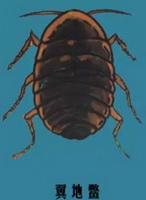 Description: Steleophaga plancyi (Boleny) is also known as Steleophaga plancyi Boleny and commonly referred to as Jì Dì Biē. Only males possess wings; females are apterous. The male measures approximately 2.2 cm in length. The female is 3.0–3.6 cm long, broadly ovate, and wider than Eupolyphaga sinensis Walker. The body is dorsoventrally flattened; the head is small and curved ventrally; mouthparts are chewing type; mandibles are robust; antennae are filiform, elongated, and slightly clavate; compound eyes are well-developed; ocelli are two in number; the pronotum is expanded shield-like, narrow anteriorly and broad posteriorly. In males, the pronotum is undulated with lacunae; two pairs of wings are present—leathery tegmina (forewings) and membranous hindwings—which fold fanwise at rest; locomotion is primarily by walking, with flight rare. The first abdominal sternite is extremely short; retinaculum veins are undeveloped; the eighth and ninth abdominal tergites are reduced, caudate, and terminate in a single pair of cerci. Male genitalia bear a pair of ventral spines on the ninth sternite; in females, the eighth and ninth sternites are concealed beneath the seventh. Genitalia are non-protruding. Three pairs of thoracic legs are equally developed, covered with fine hairs and spines; coxae are enlarged and partially cover the ventral thorax and abdomen. Each tarsus comprises five segments and terminates in two claws.
 Life Habits: It is nocturnal—remaining motionless and concealed during daylight hours and foraging at night. It inhabits natural microhabitats such as soil beneath tree roots, leaf litter under rocks, chaff piles in rice stores, damp corners of granaries or oil mills, kitchens, stove bases, and other humid locations.
