✵This article documents the herb Cutch (Black Catechu), including its English name, Latin name, Pinyin name, properties and flavor, botanical source—namely, a single plant species: (1) Acacia catechu (L.f.) Willd.—with a detailed description of its botanical features, growth characteristics, ecological environment, macroscopic characteristics of the crude herb, pharmacological actions, medicinal efficacy, and administration guidelines.
Catechu (Cutch, Black Catechu)
Pinyin Name: Ér Chá
English Name: Cutch; Black Catechu
Latin Name:Catechu Properties and Flavor: Slightly cold; bitter and astringent
Brief Introduction:Catechu is a dry extract prepared from the debarked stems and branches of Acacia catechu (L.f.) Willd. It is used externally as an astringent for chronic ulcers, eczema, and traumatic bleeding. Commonly known names include Catechu, Cutch, Black Catechu, and Ér Chá.
Botanical Source: Classical Chinese herbal works—including authoritative materia medica—define Catechu (Cutch, Black Catechu) as the dried sap extract obtained from the debarked stems and branches of Acacia catechu (L.f.) Willd. This species belongs to the genus Acacia Mill., family Fabaceae (syn. Leguminosae, Papilionaceae), order Fabales. The following describes this commonly used species:
Acacia catechu (L.f.) Willd.
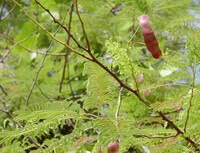
Botanical Description: Also known as Mimosa catechu L.f., this species is commonly called Ér Chá. It is a deciduous small tree reaching 6–13 m in height. The bark is brown, longitudinally fissured and flaky but does not exfoliate entirely. Young branchlets are pubescent. Bipinnately compound leaves are alternate, 6–12 cm long; a pair of flat, brown, hooked stipular spines is usually present; glands occur near the base of the primary petiole, and several pairs of pinnae arise at the rachis apex; the rachis is densely pilose; there are 10–30 pairs of pinnae; each pinna bears 20–50 pairs of leaflets, which are linear (filiform), 2–8 mm long and 1–1.5 mm wide, with sparse hairs along the margins.
Racemes are axillary. The calyx is tubular, 5-lobed at the apex, and sparsely hairy. There are five petals—yellow or white, lanceolate or oblanceolate, 2–3 times as long as the calyx—and sparsely hairy. Numerous stamens are present; filaments are free and exserted beyond the corolla. There is one pistil; the ovary is superior, oblong-ovate; the style is slender and elongated.
Fruits are dehiscent legumes (pods), linear-lanceolate, 5–12 cm long and 1–1.8 cm wide, brown, glossy, with a beak-like rostrum at the apex; the carpopodium measures 3–7 mm; color is purplish-brown (puce). Each pod contains 3–10 seeds. Flowering occurs from April to August; fruiting extends from September to January of the following year.
Ecological Environment: This species is native to and widely distributed across tropical and subtropical regions of South and Southeast Asia; It is also distributed in China.
Growth Characteristics:Acacia catechu thrives in tropical climates and prefers warm, humid environments. It is intolerant of frost.
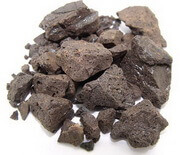
Characteristics of the Herb: The crude herb occurs as nearly square blocks or irregular lumps of varying sizes. The surface is brown to dark brown (nearly black), smooth or slightly rugose, and faintly lustrous. The texture is brittle and friable; the fractured surface is irregular, glossy, and punctate (alveolate). It is odorless; the taste is distinctly astringent and bitter, followed by a mild sweetness.
Pharmacological Actions: (1) hepatoprotective and choleretic effects; (2) modulation of immune function; (3) inhibition of intestinal motility and anti-diarrheal effect; (4) hypoglycemic activity; (5) antimicrobial activity: catechu exhibits inhibitory effects against Staphylococcus aureus, Staphylococcus albicans, beta-hemolytic streptococcus, Candida albicans, Pseudomonas aeruginosa, Corynebacterium diphtheriae, Proteus vulgaris, Shigella dysenteriae, Salmonella typhi; it also shows significant inhibitory activity against certain viruses and fungi.
Medicinal Efficacy: Promoting blood circulation to alleviate pain, arresting bleeding and promoting granulation, astringing dampness and healing sores, clearing lung heat and resolving phlegm, clearing heat and dissolving phlegm. It is indicated for traumatic injuries, bleeding wounds, hematemesis, epistaxis (including bleeding from the five sense organs or subcutaneous tissues), non-healing ulcers and sores (e.g., ruptured abscesses resistant to healing), eczema, moist dermatoses, ulcerative gingivitis (gingival atrophy), aphthous ulcers, hematuria, hematochezia, metrorrhagia, cough due to lung heat, hemorrhoids, carbuncles and swellings, and cough with phlegm-heat.
Administration of Catechu (Ér Chá):
Reference:
Administration Guide for Catechu (Ér Chá)
TCM Books:
(1) Internally: 1–3 grams, decocted in a cloth bag; commonly formulated into pills or powders. External use: appropriate amount. (2) Internally: water decoction, 0.9–3 grams; or prepared as pills or powders. External use: appropriate amount, applied as finely powdered herb sprinkled onto the affected area, or mixed with a suitable medium and applied topically.

 ✵This article documents the herb Cutch (Black Catechu), including its English name, Latin name, Pinyin name, properties and flavor, botanical source—namely, a single plant species: (1) Acacia catechu (L.f.) Willd.—with a detailed description of its botanical features, growth characteristics, ecological environment, macroscopic characteristics of the crude herb, pharmacological actions, medicinal efficacy, and administration guidelines.
 Pinyin Name: Ér Chá
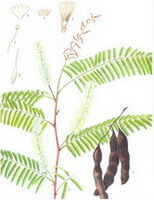 Botanical Description: Also known as Mimosa catechu L.f., this species is commonly called Ér Chá. It is a deciduous small tree reaching 6–13 m in height. The bark is brown, longitudinally fissured and flaky but does not exfoliate entirely. Young branchlets are pubescent. Bipinnately compound leaves are alternate, 6–12 cm long; a pair of flat, brown, hooked stipular spines is usually present; glands occur near the base of the primary petiole, and several pairs of pinnae arise at the rachis apex; the rachis is densely pilose; there are 10–30 pairs of pinnae; each pinna bears 20–50 pairs of leaflets, which are linear (filiform), 2–8 mm long and 1–1.5 mm wide, with sparse hairs along the margins.
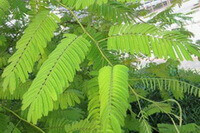 Ecological Environment: This species is native to and widely distributed across tropical and subtropical regions of South and Southeast Asia; It is also distributed in China.
 Characteristics of the Herb: The crude herb occurs as nearly square blocks or irregular lumps of varying sizes. The surface is brown to dark brown (nearly black), smooth or slightly rugose, and faintly lustrous. The texture is brittle and friable; the fractured surface is irregular, glossy, and punctate (alveolate). It is odorless; the taste is distinctly astringent and bitter, followed by a mild sweetness.
