
Acupuncture and Moxibustion
-
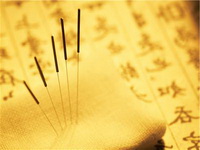 ✵Acupuncture and Moxibustion is a discipline based on traditional Chinese medicine theory. It involves studying meridians, acupoints, and acupuncture-moxibustion methods, as well as discussing the application of acupuncture and moxibustion in the prevention and treatment of diseases.
The Acupuncture and Moxibustion theories are primarily composed of acupuncture theory, meridian system theory, acupoint theory, extra points, moxibustion, and other techniques derived from acupuncture.
-
- Febrile Disease and Cold-induced Disease according to Shang Han Lun
- Miscellaneous Internal Disease according to Jin Kui Yao Lüe
- Yin Syndromes
- Syndromes of Traditional Chinese Medicine
- Gynecology Syndromes (Women's Syndromes)
- Introduction of TCM Diagnostics:Diagnostic Methods
- Introduction of TCM Diagnostics:Syndrome Differentiation
- Introduction of TCM Therapeutics
- Introduction of Prominent Ancient Herbalists
- Introduction of Well-Known Ancient Works
- Introduction of Four Seasons and Twenty Four Solar Terms
- Introduction of Yun Qi Theory
- TCM Herbalism:Herbs and Classifications
- Fundamental Theories:Essence Qi,Yin Yang,Five-Elements,Correspondence
- Introduction of Acupuncture and Moxibustion
- Acupuncture and Moxibustion: A brief introduction
Acupuncture and moxibustion theories are primarily composed of acupuncture theory, the theory of the meridian system, acupoints, meridian points, extra points, moxibustion, and other techniques derived from acupuncture.Read more 
- Acupuncture
Acupuncture, also known as needling, is a traditional Chinese therapy that involves regulating the body's functions to cure diseases by stimulating certain sites on the body with special needles.Read more
- Meridian System
The theory of the meridians is a fundamental component of Traditional Chinese Medicine (TCM). According to this theory, an internal network of channels—termed meridians—facilitates the circulation of Qi and blood, interconnects the zang-fu viscera with the superficial tissues and organs, and integrates the human body into a coordinated, organic whole.Read more
- Acupoints: Meridian Points
The meridian points are acupuncture points of a regular meridian. The meridian points of lung meridian, meridian points of large intestine meridian, stomach meridian, spleen meridian, heart meridian, small intestine meridian, bladder meridian, kidney meridian, pericardium meridian, triple energizer meridian, gallbladder meridian, liver meridian, governor vessel, and conception vessel are introduced.Read more
- Acupoints: Extra Points
Extra points are acupuncture-moxibustion points not located on the standard meridians. Basic categories of extra points include: — Head and Neck (HN) points — Chest and Abdomen (CA) points — Back (B) points — Upper Extremity (UE) points — Lower Extremity (LE) points — Ashi point.Read more
- Moxibustion and other techniques derived from Acupuncture
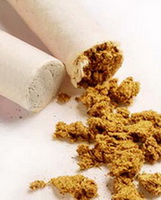 Moxibustion is a therapeutic procedure that applies heat to specific points or regions on the body surface using ignited moxa, thereby regulating the flow of Qi and blood in the meridians and the functional activities of the zang-fu viscera. Cupping therapy involves placing a vacuumized cup—typically created by fire—onto the affected area or other parts of the body surface to achieve therapeutic effects.Read more
- Diagrams of the Fourteen Meridians
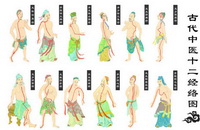 The diagrams of the fourteen meridians are introduced, including the diagrams of the lung meridian, large intestine meridian, stomach meridian, spleen meridian, heart meridian, small intestine meridian, bladder meridian, kidney meridian, pericardium meridian, triple energizer meridian, gallbladder meridian, liver meridian, governor vessel, and conception vessel.Read more
Edited:
