✵The article records the herb Pearl, including its English name, Latin name, Pinyin name, properties and flavor, and its source—seven animal species as defined in classical herbal works: (1) Pteria martensii (Dunker), (2) Hyriopsis cumingii (Lea), (3) Cristaria plicata (Leach), and other four usable animal species, (4) Pinctada margaritifera (Linnaeus), (5) Pinctada maxima (Jameson), (6) Pinctada chemnitzi (Philippi), and (7) Anodonta woodiana (Lea)—along with a detailed introduction to the morphological and biological features of these species, their life habits and ecological environments, the characteristics of the herb Pearl, its pharmacological actions, medicinal efficacy, and administration guidelines.
Margarita (Pearl)
Pinyin Name: Zhēn Zhū
English Name: Pearl
Latin Name:Margarita Properties and Flavor: Cold, sweet, salty
Brief Introduction: The herb Margarita is a lustrous concretion formed within certain bivalve mollusks—e.g., Pteria martensii (Dunker), Hyriopsis cumingii (Lea), and Cristaria plicata (Leach) (family Unionidae)—and is used (1) as a sedative–tranquilizing and anticonvulsant agent for treating convulsions due to high fever or infantile convulsions, and (2) externally to promote wound healing. The herb is commonly known as Margarita, Pearl, or Zhēn Zhū.
Source: Classical herbal works define Margarita (Pearl) as the lustrous concretion formed in response to irritation within bivalve mollusks, specifically: (1) Pteria martensii (Dunker), (2) Hyriopsis cumingii (Lea), or (3) Cristaria plicata (Leach). Additional authoritative herbal works further include: (4) Pinctada margaritifera (Linnaeus), (5) Pinctada maxima (Jameson), (6) Pinctada chemnitzi (Philippi), and (7) Anodonta woodiana (Lea). These species belong to the genus Pteria or Pinctada (family Pteriidae, order Pteriomorphia), or to the genera Hyriopsis, Cristaria, and Anodonta (family Unionidae, order Unionoida). The three species emphasized in foundational herbal classics—as well as the four additional commonly utilized species—are described below:
(1) Pinctada martensii (Dunker)
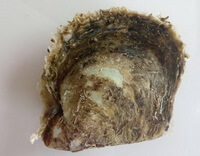
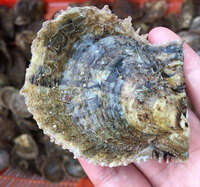
Description: This species is commonly known as Pteria martensii (Dunker), also referred to as Mǎ Shì Zhēn Zhū Bèi, Hé Pǔ Zhū Mǔ Bèi, or Zhēn Zhū Bèi. It is a bivalve mollusk of the genus Pinctada, family Pteriidae, order Pteriomorphia. The shell is rhomboid in outline, brittle, measuring 50–90 mm in length and 18–32 mm in width; height is approximately equal to length, with larger individuals exceeding 100 mm in height. The umbo is situated anteriorly, and auricles are present on both sides—the anterior auricle being slightly smaller than the posterior one. The two valves are inequilateral: the right valve is relatively flat, whereas the left valve is slightly convex; a distinct byssal notch occurs beneath the anterior auricle of the right valve. The dorsal margin is straight and flattened; the ventrolateral margin is rounded. The shell surface is fawn-colored (flavotestaceous), bearing extremely fine, flaky, thin, and brittle concentric growth lines that readily exfoliate. The central region is abraded, while the area near the ventrolateral margin exhibits orderly, tongue-like extensions; the apex is slightly tilted, and the byssal foramen is large. The byssus is trichoid. The nacreous layer on the inner surface—particularly in the central region—is thick and well developed, exhibiting intense pearly luster. Upon irritation of the mantle, epithelial cells proliferate rapidly to form a pearl sac, which continuously secretes nacre (calcium carbonate in aragonite form), gradually forming a pearl. The inner margin of the shell is pale yellow and lacks a nacreous layer. The hinge line is straight, featuring a prominent central tooth and an elongated, dentate sclerite extending along the hinge line. The ligaments are purplish-brown, with conspicuous scars of the basal adductor muscle located below the umbo; the adductor muscle scar is large, oblong, slightly pointed anteriorly, and positioned slightly posterior to the shell’s center.
Life Habit: This species inhabits tropical and subtropical marine environments. Its natural habitat includes sheltered bays and offshore seabeds where water temperature ranges from 10 °C to 35 °C (50–95 °F); it cannot survive below 6–7 °C (42.8–44.6 °F) or above 36–40 °C (96.8–104 °F). It typically occurs at depths of less than 10 meters—most commonly between 5 and 10 meters—and has a narrow distribution range. Adults remain permanently attached to rocks and boulders via the byssus. Salinity tolerance ranges from 16 to 35 ppt. Sexual maturity is usually reached at around 6 months of age, with individuals initially male and later undergoing protandrous sex change to female. Females over 4 years old are predominate; rare hermaphroditic individuals may occur. In China, peak spawning occurs during summer and autumn when water temperatures reach 25–30 °C (77–86 °F). Larvae and juveniles feed on microscopic unicellular algae and organic detritus. Growth is rapid: one-year-old individuals may attain lengths of approximately 7 cm.
Ecological Environment: This species thrives in sheltered bays with calm wave action, on substrates of sediment, gravel, or bedrock—especially where biofilm (e.g., diatom films) is abundant. Optimal growth occurs in areas with moderate water flow and high nutrient availability. It inhabits intertidal zones down to approximately 10 m depth, most commonly below 5 m. Diatoms constitute its primary food source. The optimal growth temperature range is 15–30 °C (59–86 °F); spawning occurs from May to October. Growth rate is rapid—two-year-old individuals typically reach shell heights of about 70 mm. Its distribution encompasses coastal regions of China.
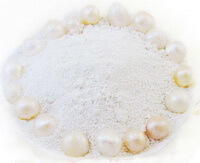
Characteristics of the Herb: Pearls are spherical, oblong, or oval-rod shaped, 1.5–8 mm in diameter. Their surface is off-white, pale pink, pale yellow, or light blue; they are translucent, smooth, or exhibit subtle undulations, displaying a distinctive iridescent luster. The texture is firm and hard; fractured surfaces reveal laminated structure. The herb is nearly odorless and tasteless—or possesses only a very mild taste.
Medicinal Efficacy: Calms the nerves (relieves mental and physical uneasiness and promotes tranquilization), relieves palpitations and calms the nerves, nourishes Yin and extinguishes wind (alleviates dizziness, high fever, infantile convulsions, epilepsy, etc.), clears heat and promotes expectoration, clears the liver and improves vision, enhances vision and resolves nebula, detoxifies and promotes granulation (stimulates tissue regeneration), moisturizes the skin and lightens hyperpigmentation. It is indicated for palpitations and insomnia, severe palpitations, infantile convulsions and epilepsy, irritability and insomnia (restlessness, sleeplessness), dysphoria with a stifling sensation, consumptive thirst (wasting thirst), pharyngitis (throat obstruction), stomatopathy (oral ulcers), oral and lingual sores, ulceration and necrosis of the throat, red eyes and nebula, non-healing ulcers and sores, skin hyperpigmentation, etc.
Administration of Margarita (Zhēn Zhū):
Reference:
Administration Guide for Margarita (Zhēn Zhū)
TCM Books:
(1) Internally:0.1–0.3 grams per dose, usually formulated into pills or powders. External use: appropriate amount. (2) Internally: formulated into pills or powders, 2–3 fen (≈0.6–0.9 grams) per dose. External use: finely ground herb powder applied topically, instilled into the eyes, or blown into the throat; (3) Internally: finely ground herb powder, 0.3–1 grams per dose; commonly prepared as pills or powders; not suitable for decoction in water. External use: appropriate amount of finely ground herb powder applied topically, instilled into the eyes, or blown into the throat.
Contraindications, Precautions, and Adverse Reactions: Margarita must be ground for an extended period into an extremely fine, pollen-like powder; if insufficiently ground, it may damage the Zang-Fu organs. Contraindicated during pregnancy.
(4) Pinctada margaritifera (Linnaeus)
Description: This shellfish is commonly known as Zhū Mǔ Bèi, Zhēn Zhū Bèi, or nacre. It belongs to the genus Pinctada, family Pteriidae, order Anisomyaria. The shell is irregularly circular, firm and thick; typical adult shells measure 110–150 mm in length, with larger specimens reaching up to 200 mm; height is nearly equal to length. The left valve is slightly convex and somewhat larger than the right valve. The shell apex is located at the anterior end of the dorsal margin and bends forward. The apex of the right valve bears a depression—the byssal foramen. The auricles (shell “ears”) are inconspicuous. The shell surface is brown or olive-brown (greenish-brown); the apex is smooth and sap-green (dark green), while the remainder is covered with concentric scales extending to the shell margin—these scales are spine-shaped or serrated. Middle-scale layers often exfoliate, revealing whitish radial lines. The inner nacreous layer is thick and iridescent; the hinge line is straight and edentulous; the ligament is strong and purplish-brown (puce); the scar of the basalar muscle is small, whereas the adductor muscle scar is broad, large, oblong, and slightly calabash-shaped. The mantle edge is black; the anal membrane contains melanin, is hypertrophic and wide, and bears a small apical protrusion.
Ecological Environment: This shellfish inhabits the intertidal zone near the low-tide line, attaching itself via byssus to rock crevices or coral reefs—most commonly fixed at the wind- and wave-sheltered base of rocks. It is distributed along China’s coastal regions and is an excellent species for pearl cultivation.
(5) Pinctada maxima (Jameson)
Description: This shellfish is commonly known as Dà Zhū Mǔ Bèi or pearloyster (Pinctada maxima). It belongs to the genus Pinctada, family Pteriidae, order Anisomyaria. The shell is nearly pentagonal and slightly circular, with a solid, thick structure. Adult shells exceed 20 cm in length; large specimens surpass 30 cm and weigh up to 4–5 kg—making it the largest among pearl oysters. The shell is slightly flattened; the apex lies at the anterior end of the dorsal margin. The anterior auricle is small; there is no posterior auricle. Surface scales are irregularly arranged and grayish-yellow brown; radial ribs are pale brown. In older shells, scale layers often exfoliate, exposing the nacreous (pearly) layer, rendering radial ribs inconspicuous. The inner shell surface exhibits a thick, silvery nacreous layer; margins are tawny (yellow-brown). The posterior end of the hinge is slightly protruding. The ligament is broad and thick, leaving a distinct indentation upon detachment. The adductor muscle scar is broad, large, and subreniform; its surface is uneven, bearing numerous cross-striations. The anal membrane is ligulate, with a broadly circular apex.
Distinguishing Features: Pinctada maxima is one of the largest pearl oysters. The shell is large and thick, somewhat butterfly-shaped: the left valve is slightly raised, the right valve is relatively flat; the anterior auricle is slightly elevated, while the posterior auricle is reduced to a rounded, blunt projection. The shell surface is brown; the scale layer near the apex is tightly packed; the posterior edge of the scale layer is distinct. The interior surface displays pearly luster; the nacreous layer is silver-white and thick. The margin is slightly yellow or yellowish-brown; the hinge is robust; and a prominent adductor muscle scar is visible on the inner surface, located in the middle to posterior portion of the closed valve.
Life Habit:Pinctada maxima inhabits coral reefs, rocky substrates, reef sands, and gravelly seabeds. Its depth range extends to 200 m, with optimal occurrence between 20–50 m. Habitat water temperature ranges from 15.5–30.3 °C (59.9–86.5 °F), with an optimum of 24–28 °C (75.2–82.4 °F). Activity ceases when temperature drops to 13 °C (55.4 °F). As a filter-feeding bivalve, it primarily consumes phytoplankton—including diatoms and dinoflagellates—and also ingests ciliates and other suspended microorganisms.
Ecological Environment: This species predominantly inhabits waters around 20 m depth and can be collected down to 60 m. It is a tropical and subtropical species found on coastal islands of China, and is also distributed across Southeast Asia, northern Australia, and the western Pacific Ocean.
(6) Pinctada chemnitzi (Philippi)
Description: This shellfish is commonly known as Cháng ěr Zhū Mǔ Bèi and has been historically referred to as Pinctada epitheca Iredale and Pteria tegulata Zhang et al. It belongs to the genus Pinctada, family Pteriidae, order Anisomyaria. The shell is nearly square, approximately 100 mm in length, and slightly larger than Pinctada martensii. The apex is positioned anteriorly; there is no anterior auricle, whereas the posterior auricle is elongated, forming an aliform (wing-like) projection. The right valve is relatively flat; the left valve is slightly convex. The marginal scale layer is thin, flaky, and obliquely oriented. The inner shell surface bears a silver-white nacreous (pearly) layer, and the adductor muscle scar is elongated and narrow.
Life Habit: This species inhabits sheltered bays with calm wave action and sediment-rich, rocky, or gravelly seabeds—particularly where filamentous substrates (e.g., byssal threads or biofilm) are abundant. It thrives best in areas with moderate, unidirectional water flow and nutrient-rich waters. It occurs from the low-tide line to depths of ~10 m, most commonly below 5 m. Diatoms constitute its primary food source. The optimal growth temperature is 15–30 °C (59–86 °F); spawning occurs from May to October. Growth is rapid: individuals typically reach ~7 cm shell height within two years. It is a warm-water, widely distributed species, favoring warm seas with abundant food and sheltered, laminar-flow bays. Its vertical distribution spans from the low-tide line to depths exceeding 200 m. It attaches via byssus to rocks, coral reefs, and shells.
Ecological Environment: This species is distributed along the coastal regions of China and extends across the Malay Peninsula, Luzon Island, westward to Madagascar, the Red Sea, Sri Lanka, and Mergui Archipelago, and eastward to northern Australia.
(2) Hyriopsis cumingii (Lea).
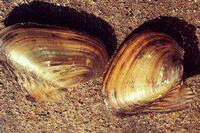
Description: The shellfish is commonly known as Sān Jiǎo Fān Bàng. It is a bivalve mollusk of the genus Hyriopsis, family Unionidae, order Unionoida. The shell is large and flattened; the chitinous layer is firm and hard, and its overall shape is slightly triangular. The apices of the left and right valves are tightly joined. The posterior dorsal margin is elongated and projects upward, forming a large triangular, velum-like hind wing; the anterior dorsal margin is short and angular. The ventrolateral margin is nearly straight, with a slight arc. The shell surface is not smooth, and the apex bears a thick, prominent costa. Growth lines are arranged in concentric rings with wide spacing. The inner surface of the shell is smooth, and the nacreous layer (pearly layer) is cream-white (milky white).
Ecological Environment: This species inhabits rivers and lakes with lightly cemented, slightly sandy substrates. It is distributed in China.
(3) Cristaria plicata (Leach).
Description: The shellfish is commonly known as Zhě Wén Guān Bàng. It is a bivalve mollusk of the genus Cristaria, family Unionidae, order Unionoida. (formerly place in order Eulamellibranchia.) The shell is relatively large and forms a slightly scalene triangle. The anterior dorsal margin lacks a conspicuous crown-like protrusion; the posterior dorsal margin extends obliquely upward, forming a prominent crown. A series of progressively thickening longitudinal ribs extends from the shell apex along the posterior back of the crown. The ventrolateral margin is nearly straight. The shell surface ranges from dark yellowish-green to blackish-brown; the apex is often eroded, resulting in loss of the outer pigmented layer. The nacreous layer (pearly layer) is glossy.
Cultured pearls produced by this species yield high quantities, but pearl cultivation is less convenient than with Hyriopsis cumingii. Moreover, the nacreous layer quality is coarse, and the resulting pearls are pale yellow; thus, the overall quality of cultured pearls from Cristaria plicata is inferior to those from Hyriopsis cumingii.
Ecological Environment: This species lives in muddy substrates at the bottom of rivers and lakes and moves slowly. It is distributed in China.
(7) Anodonta woodiana (Lea).
Description: The shellfish is commonly known as Bèi Jiǎo Wú Chǐ Bàng, or Sinanodonta woodiana. It is a bivalve mollusk of the genus Anodonta, family Unionidae, order Unionoida. The shell is oval with angular protrusions: the anterior end is slightly rounded, the posterior end is beveled, and the ventrolateral margin is arcuate. Three thick costae radiate from the shell apex across the posterior back. The shell surface is olive-brown. The adductor muscle scars are oblong-oval. The nacreous layer on the inner surface of the shell is cream-white (milky white).
Ecological Environment: This species inhabits muddy substrates at the bottom of rivers and lakes. It is widely distributed in China—in rivers, lakes, reservoirs, ditches, and ponds—and is one of the most common freshwater mussel species in the country. Pearl yield is high, but pearl quality is inferior to that of Hyriopsis cumingii and Cristaria plicata. It is generally used only as a substitute host for pearl cultivation in regions where Hyriopsis cumingii and Cristaria plicata are scarce.

 ✵The article records the herb Pearl, including its English name, Latin name, Pinyin name, properties and flavor, and its source—seven animal species as defined in classical herbal works: (1) Pteria martensii (Dunker), (2) Hyriopsis cumingii (Lea), (3) Cristaria plicata (Leach), and other four usable animal species, (4) Pinctada margaritifera (Linnaeus), (5) Pinctada maxima (Jameson), (6) Pinctada chemnitzi (Philippi), and (7) Anodonta woodiana (Lea)—along with a detailed introduction to the morphological and biological features of these species, their life habits and ecological environments, the characteristics of the herb Pearl, its pharmacological actions, medicinal efficacy, and administration guidelines.
 Pinyin Name: Zhēn Zhū
 Description: This species is commonly known as Pteria martensii (Dunker), also referred to as Mǎ Shì Zhēn Zhū Bèi, Hé Pǔ Zhū Mǔ Bèi, or Zhēn Zhū Bèi. It is a bivalve mollusk of the genus Pinctada, family Pteriidae, order Pteriomorphia. The shell is rhomboid in outline, brittle, measuring 50–90 mm in length and 18–32 mm in width; height is approximately equal to length, with larger individuals exceeding 100 mm in height. The umbo is situated anteriorly, and auricles are present on both sides—the anterior auricle being slightly smaller than the posterior one. The two valves are inequilateral: the right valve is relatively flat, whereas the left valve is slightly convex; a distinct byssal notch occurs beneath the anterior auricle of the right valve. The dorsal margin is straight and flattened; the ventrolateral margin is rounded. The shell surface is fawn-colored (flavotestaceous), bearing extremely fine, flaky, thin, and brittle concentric growth lines that readily exfoliate. The central region is abraded, while the area near the ventrolateral margin exhibits orderly, tongue-like extensions; the apex is slightly tilted, and the byssal foramen is large. The byssus is trichoid. The nacreous layer on the inner surface—particularly in the central region—is thick and well developed, exhibiting intense pearly luster. Upon irritation of the mantle, epithelial cells proliferate rapidly to form a pearl sac, which continuously secretes nacre (calcium carbonate in aragonite form), gradually forming a pearl. The inner margin of the shell is pale yellow and lacks a nacreous layer. The hinge line is straight, featuring a prominent central tooth and an elongated, dentate sclerite extending along the hinge line. The ligaments are purplish-brown, with conspicuous scars of the basal adductor muscle located below the umbo; the adductor muscle scar is large, oblong, slightly pointed anteriorly, and positioned slightly posterior to the shell’s center.
 Life Habit: This species inhabits tropical and subtropical marine environments. Its natural habitat includes sheltered bays and offshore seabeds where water temperature ranges from 10 °C to 35 °C (50–95 °F); it cannot survive below 6–7 °C (42.8–44.6 °F) or above 36–40 °C (96.8–104 °F). It typically occurs at depths of less than 10 meters—most commonly between 5 and 10 meters—and has a narrow distribution range. Adults remain permanently attached to rocks and boulders via the byssus. Salinity tolerance ranges from 16 to 35 ppt. Sexual maturity is usually reached at around 6 months of age, with individuals initially male and later undergoing protandrous sex change to female. Females over 4 years old are predominate; rare hermaphroditic individuals may occur. In China, peak spawning occurs during summer and autumn when water temperatures reach 25–30 °C (77–86 °F). Larvae and juveniles feed on microscopic unicellular algae and organic detritus. Growth is rapid: one-year-old individuals may attain lengths of approximately 7 cm.
 Ecological Environment: This species thrives in sheltered bays with calm wave action, on substrates of sediment, gravel, or bedrock—especially where biofilm (e.g., diatom films) is abundant. Optimal growth occurs in areas with moderate water flow and high nutrient availability. It inhabits intertidal zones down to approximately 10 m depth, most commonly below 5 m. Diatoms constitute its primary food source. The optimal growth temperature range is 15–30 °C (59–86 °F); spawning occurs from May to October. Growth rate is rapid—two-year-old individuals typically reach shell heights of about 70 mm. Its distribution encompasses coastal regions of China.
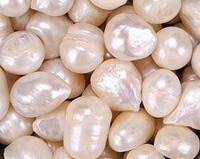 Characteristics of the Herb: Pearls are spherical, oblong, or oval-rod shaped, 1.5–8 mm in diameter. Their surface is off-white, pale pink, pale yellow, or light blue; they are translucent, smooth, or exhibit subtle undulations, displaying a distinctive iridescent luster. The texture is firm and hard; fractured surfaces reveal laminated structure. The herb is nearly odorless and tasteless—or possesses only a very mild taste.
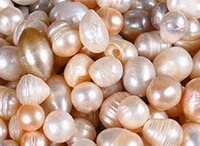 Pharmacological Actions: (1) Anti-aging effects; (2) Antioxidant effects; (3) Antitumor effects.
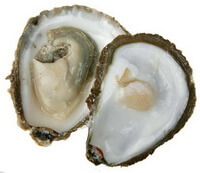 Description: This shellfish is commonly known as Zhū Mǔ Bèi, Zhēn Zhū Bèi, or nacre. It belongs to the genus Pinctada, family Pteriidae, order Anisomyaria. The shell is irregularly circular, firm and thick; typical adult shells measure 110–150 mm in length, with larger specimens reaching up to 200 mm; height is nearly equal to length. The left valve is slightly convex and somewhat larger than the right valve. The shell apex is located at the anterior end of the dorsal margin and bends forward. The apex of the right valve bears a depression—the byssal foramen. The auricles (shell “ears”) are inconspicuous. The shell surface is brown or olive-brown (greenish-brown); the apex is smooth and sap-green (dark green), while the remainder is covered with concentric scales extending to the shell margin—these scales are spine-shaped or serrated. Middle-scale layers often exfoliate, revealing whitish radial lines. The inner nacreous layer is thick and iridescent; the hinge line is straight and edentulous; the ligament is strong and purplish-brown (puce); the scar of the basalar muscle is small, whereas the adductor muscle scar is broad, large, oblong, and slightly calabash-shaped. The mantle edge is black; the anal membrane contains melanin, is hypertrophic and wide, and bears a small apical protrusion.
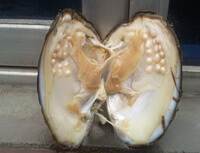 Ecological Environment: This shellfish inhabits the intertidal zone near the low-tide line, attaching itself via byssus to rock crevices or coral reefs—most commonly fixed at the wind- and wave-sheltered base of rocks. It is distributed along China’s coastal regions and is an excellent species for pearl cultivation.
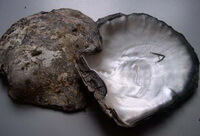 Description: This shellfish is commonly known as Dà Zhū Mǔ Bèi or pearloyster (Pinctada maxima). It belongs to the genus Pinctada, family Pteriidae, order Anisomyaria. The shell is nearly pentagonal and slightly circular, with a solid, thick structure. Adult shells exceed 20 cm in length; large specimens surpass 30 cm and weigh up to 4–5 kg—making it the largest among pearl oysters. The shell is slightly flattened; the apex lies at the anterior end of the dorsal margin. The anterior auricle is small; there is no posterior auricle. Surface scales are irregularly arranged and grayish-yellow brown; radial ribs are pale brown. In older shells, scale layers often exfoliate, exposing the nacreous (pearly) layer, rendering radial ribs inconspicuous. The inner shell surface exhibits a thick, silvery nacreous layer; margins are tawny (yellow-brown). The posterior end of the hinge is slightly protruding. The ligament is broad and thick, leaving a distinct indentation upon detachment. The adductor muscle scar is broad, large, and subreniform; its surface is uneven, bearing numerous cross-striations. The anal membrane is ligulate, with a broadly circular apex.
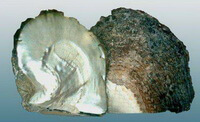 Distinguishing Features: Pinctada maxima is one of the largest pearl oysters. The shell is large and thick, somewhat butterfly-shaped: the left valve is slightly raised, the right valve is relatively flat; the anterior auricle is slightly elevated, while the posterior auricle is reduced to a rounded, blunt projection. The shell surface is brown; the scale layer near the apex is tightly packed; the posterior edge of the scale layer is distinct. The interior surface displays pearly luster; the nacreous layer is silver-white and thick. The margin is slightly yellow or yellowish-brown; the hinge is robust; and a prominent adductor muscle scar is visible on the inner surface, located in the middle to posterior portion of the closed valve.
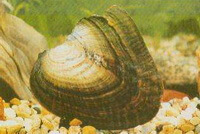
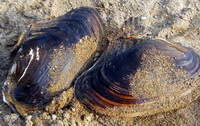 Description: The shellfish is commonly known as Sān Jiǎo Fān Bàng. It is a bivalve mollusk of the genus Hyriopsis, family Unionidae, order Unionoida. The shell is large and flattened; the chitinous layer is firm and hard, and its overall shape is slightly triangular. The apices of the left and right valves are tightly joined. The posterior dorsal margin is elongated and projects upward, forming a large triangular, velum-like hind wing; the anterior dorsal margin is short and angular. The ventrolateral margin is nearly straight, with a slight arc. The shell surface is not smooth, and the apex bears a thick, prominent costa. Growth lines are arranged in concentric rings with wide spacing. The inner surface of the shell is smooth, and the nacreous layer (pearly layer) is cream-white (milky white).
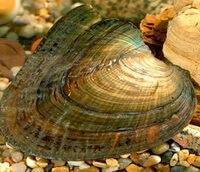 Ecological Environment: This species inhabits rivers and lakes with lightly cemented, slightly sandy substrates. It is distributed in China.
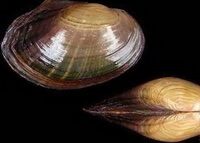 Description: The shellfish is commonly known as Zhě Wén Guān Bàng. It is a bivalve mollusk of the genus Cristaria, family Unionidae, order Unionoida. (formerly place in order Eulamellibranchia.) The shell is relatively large and forms a slightly scalene triangle. The anterior dorsal margin lacks a conspicuous crown-like protrusion; the posterior dorsal margin extends obliquely upward, forming a prominent crown. A series of progressively thickening longitudinal ribs extends from the shell apex along the posterior back of the crown. The ventrolateral margin is nearly straight. The shell surface ranges from dark yellowish-green to blackish-brown; the apex is often eroded, resulting in loss of the outer pigmented layer. The nacreous layer (pearly layer) is glossy.
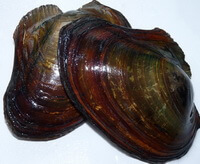 Cultured pearls produced by this species yield high quantities, but pearl cultivation is less convenient than with Hyriopsis cumingii. Moreover, the nacreous layer quality is coarse, and the resulting pearls are pale yellow; thus, the overall quality of cultured pearls from Cristaria plicata is inferior to those from Hyriopsis cumingii.
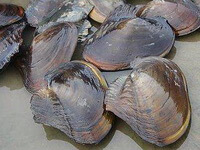 Description: The shellfish is commonly known as Bèi Jiǎo Wú Chǐ Bàng, or Sinanodonta woodiana. It is a bivalve mollusk of the genus Anodonta, family Unionidae, order Unionoida. The shell is oval with angular protrusions: the anterior end is slightly rounded, the posterior end is beveled, and the ventrolateral margin is arcuate. Three thick costae radiate from the shell apex across the posterior back. The shell surface is olive-brown. The adductor muscle scars are oblong-oval. The nacreous layer on the inner surface of the shell is cream-white (milky white).
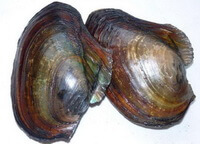 Ecological Environment: This species inhabits muddy substrates at the bottom of rivers and lakes. It is widely distributed in China—in rivers, lakes, reservoirs, ditches, and ponds—and is one of the most common freshwater mussel species in the country. Pearl yield is high, but pearl quality is inferior to that of Hyriopsis cumingii and Cristaria plicata. It is generally used only as a substitute host for pearl cultivation in regions where Hyriopsis cumingii and Cristaria plicata are scarce.
