
The benefits of going to bed early and getting up early.
- Introduction.
-
 Introduction: "Work at sunrise and rest at sunset" is the most primitive way of work and rest. Normal sleep can provide the human body with sufficient hematopoietic time, which is the most basic and indispensable healthy habit for health maintenance. A famous traditional Chinese medicine health book, Yang Sheng San Yao (Three Essentials of Health), records: "Sleep is the happiest time in life." As the ancient saying goes, "If you do not seek immortals, seek the sleeping quarters... When you wake up refreshed, you are as vibrant and real as a person can be." Traditional Chinese medicine has always attached great importance to the science of sleep, stating that "sleep and food are the top priorities for health" and "those who can sleep well and eat well can live long."
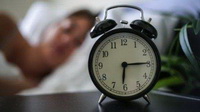 "Early to bed, early to rise — good health" is a well-known saying. The ancient works Huang Di Nei Jing (the Yellow Emperor’s Internal Canon) records: "When Yang Qi declines, lie down; when Yin Qi prevails, sleep," and "During the three months of spring... go to bed late and rise early. During the three months of summer... go to bed late and rise early. During the three months of autumn... go to bed early and rise early. During the three months of winter... go to bed early and rise late, waiting for the sun."
- The benefits of going to bed early and getting up early.
-
 ✵The importance of sleep:
In traditional Chinese medicine, "man corresponds to heaven and earth," meaning humans live between heaven and earth and are closely connected with nature. The flow of Qi and blood follows natural rhythms. Sleep should also adapt to seasonal changes; sleep timing should be adjusted according to the distinct characteristics of each season. The optimal hematopoietic period for the body is from dusk until midnight, and deep sleep is essential during this time to convert nutrients into blood or other storable, usable substances. "Sunrise for work, sunset for rest" is humanity’s most fundamental pattern of activity and rest; arbitrary disruption of this rhythm inevitably harms health significantly. Moreover, excessive sleep does not cause weight gain. Young women who value beauty should avoid the misconception that staying up late aids weight loss. Staying up late only depletes vitality, accelerates physical deterioration, and disrupts metabolism — all counterproductive to weight management. Even if slight weight gain occurs after a period of regular sleep, it reflects increased Qi and blood — a sign of improved constitution. If unconvinced, one may weigh oneself before beginning such a routine.
 ✵Early to bed and early to rise: What time is ideal?
In spring, when all things begin to germinate, go to bed somewhat later and rise appropriately early. In summer, it is better to go to bed late and rise early. In autumn, as Yang Qi converges, go to bed early and rise at dawn. In winter, as Yang Qi retreats inward, go to bed early and rise late — preferably after sunrise. Going to bed early generally means resting around 10 p.m., but regardless of season, one should not delay bedtime beyond 11 p.m. The period from 11 p.m. to 1 a.m. corresponds to the gallbladder meridian — the most favorable time for bone marrow hematopoiesis. From 1 a.m. to 3 a.m. is the liver meridian period — the optimal window for liver repair. A total sleep duration of 7–8 hours is advisable. Too little sleep depletes energy and spirit; however, longer sleep is not necessarily better. Moderate exercise nourishes Qi, but excess exercise consumes blood; adequate sleep nourishes blood, yet oversleeping depletes Qi. It is best to establish consistent sleep habits — regular bedtime and wake-up time — with minimal daily variation to help regulate the biological clock.
The 90-minute sleep cycle represents a natural recovery point. Thus, 7.5 hours of uninterrupted, high-quality sleep offers optimal efficiency and benefit.
- The benefits of going to bed early and rising early give the body ample time for hematopoiesis.
-
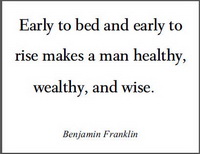 ✵1. Refresh and restore essence: Sleeping in accordance with natural rhythms better restores the body’s vital energy. It alleviates physical and mental fatigue, replenishes the day’s energy expenditure, and allows the body to relax and repair overnight.
✵2. Relieve stress: People who go to bed early and rise early tend to experience lower levels of psychological stress and higher levels of mental well-being compared to night owls. Early sleepers exhibit lower salivary cortisol levels—and consequently reduced risk of depression. The body secretes two primary classes of hormones—diurnal (morning-predominant) and nocturnal (evening-predominant); cortisol is a key diurnal hormone that helps regulate the stress response.
 ✵3. Disease prevention: In winter, going to bed early and rising late helps protect the body from cold exposure, thereby reducing the risk of respiratory infections and cold-induced cardiovascular or cerebrovascular events. Adequate sleep also supports physical recovery and enhances immune function—both critical for disease prevention.
✵4. Pace yourself: As the saying goes, “The early bird catches the worm.” Yet for many night-owl office workers, morning wake-up is often rushed and stressful. Beyond those who stay up late due to work demands, many people delay waking out of habit or inertia—and this chronic pattern of “sleep deprivation followed by frantic mornings” poses tangible health risks. Allowing sufficient time upon waking not only fosters healthy routines but also improves daily mental clarity and emotional resilience, enabling a calm, focused start to the day.
 ✵5. Time management: Rising early lets you breathe fresh air bathed in the morning sun. Light morning exercise helps expel residual carbon dioxide from the lungs, boosting energy and sharpening mental focus. After exercising, you may even shop for fresh vegetables—produce is typically freshest and most affordable in the early morning, and buying then avoids the evening rush, saving time on washing, cutting, and cooking, thus supporting earlier, healthier dinners.
✵Important considerations: Do not return to sleep after morning exercise—especially among older adults. “Sleeping back” disrupts circadian rhythm regulation, potentially leading to daytime drowsiness and nighttime insomnia (“tired all day, unable to sleep at night”) and increasing the risk of acute cardiovascular events.
Edited and last revised:
