
What is the healthiest sleeping position?
- Introduction.
-
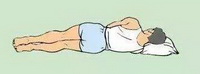 Introduction: Good sleep habits and a healthy sleeping posture can not only improve sleep quality and enhance blood circulation but also help prevent various potential diseases and promote overall physical health.
As an old saying goes, “Stand like a pine, sit like a bell, walk like the wind, lie like a bow.” This illustrates that whether standing, sitting, walking, or sleeping, each posture involves important physiological principles—not only etiquette but also support for physical development and health promotion. The ancients prescribed a sleep posture formula: “When lying on the left side, bend the left foot, bend the right arm and place the hand beneath the head, extend the right foot, and rest the left hand between the right thigh. Reverse the positions when lying on the right side.”
- What is the healthiest sleeping position?
-
 Traditional Chinese medicine holds the principle that “where there is obstruction, there is pain.” A proper sleep posture ensures unimpeded flow through all bodily orifices, smooth circulation of blood and meridians, regulation of Qi, and nourishment of the spirit—thereby aiding fatigue recovery and calming the mind.
According to the ancient medical works Qian Jin Yao Fang, “Sleeping on one’s side with knees bent strengthens the body; it is superior to supine sleeping.” This “side-lying” posture refers specifically to a semi-lateral position, which promotes full-body relaxation, harmonizes Qi and blood, and ensures optimal visceral function. Especially for older adults, the sleeping position should follow the guideline “lie like a bow,” with right-side lying generally recommended as optimal. As people age, internal organs undergo atrophic degeneration and functional decline; bones, muscles, and ligaments may also become lax and weakened. An improper sleeping posture can impede Qi and blood circulation, increasing susceptibility to age-related postural deformities. However, not all elderly individuals are suited to side sleeping—when weight is borne primarily by the shoulders and pelvis, local compression can impair blood circulation.
 ✵What is the correct sleeping position—and what is the healthiest?
Generally speaking, sleeping positions are categorized into four types: supine, prone, left lateral, and right lateral. The optimal choice depends on individual factors—including age, physical condition, and specific health concerns. Prone sleeping is the least recommended, especially for individuals with heart disease, hypertension, or cerebral thrombosis, as it places pressure on the heart and lungs and may impair breathing. People who are overweight, snore, or have respiratory disorders should avoid supine sleeping, which can cause the tongue base to collapse posteriorly and obstruct the airway. Patients with gastric disorders, acute hepatitis, or gallstones should avoid left lateral sleeping, as it may compress the heart and stomach. Right lateral sleeping is generally discouraged for pregnant women in late gestation, as it may exert pressure on the uterus and compromise fetal circulation.
 Elderly individuals with respiratory conditions should adopt a semi-lateral position. Those with varicose veins of the lower extremities, leg edema, or a history of knee arthroplasty or prior lower-limb injury are advised to sleep supine with the feet slightly elevated—ideally supported by a pillow under the calves or feet—to enhance venous return and improve lower-limb circulation. For older adults with compromised liver or gallbladder function, left lateral sleeping is recommended. Individuals with cervical spondylosis should sleep on a firm mattress while maintaining a supine posture; pillows should be of moderate height—not excessively high—to preserve natural cervical alignment. People with diabetes or those who consume excessive alcohol should prefer supine sleeping to allow unrestricted limb positioning and promote autonomic balance.
- Health benefits of an appropriate sleeping position:
-
 ✵1. Geomagnetic alignment effect: Humans are continuously influenced by Earth’s geomagnetic field. Prolonged alignment of the body along the north–south axis may facilitate resonance between the body’s meridian system and geomagnetic field lines, thereby supporting smooth Qi and blood circulation, orderly cellular function in internal organs, and a mild bio-magnetization effect—contributing to organ regulation, functional enhancement, and overall wellness.
✵2. Disease prevention: Sleeping with the head oriented southward and feet northward leverages geomagnetic influence to promote systemic circulation and significantly reduce the risk of cerebral thrombosis. A well-chosen sleeping position also helps prevent cardiovascular events triggered by visceral compression due to suboptimal postures.
✵3. Enhanced digestion: Right lateral sleeping with knees gently bent allows gravity to assist gastric emptying and propulsion of chyme toward the duodenum—supporting digestion and nutrient absorption. In this relaxed state, respiration becomes slow and regular; the brain, heart, lungs, gastrointestinal tract, muscles, and bones receive adequate rest and oxygenation. This position is particularly beneficial for individuals with functional dyspepsia or delayed gastric emptying.
✵4. Fatigue recovery: The primary physiological purpose of sleep is bodily restoration and fatigue alleviation. For healthy individuals, rigid adherence to a single sleeping posture is unnecessary—most people naturally shift positions throughout the night. As long as contraindicated postures are avoided, spontaneous positional changes remain physiologically supportive and conducive to effective fatigue recovery.
✵Tips: Finely chop onions and ginger, wrap them in a sterile gauze pouch, and place it beside (not under) the pillow. Their volatile compounds may exert a mild sedative effect on the cerebral cortex, potentially aiding insomnia management.
Edited and last revised:
