
The cause of sudden twitches during sleep and effective ways to prevent them.
- Introduction.
-
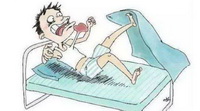 Introduction: People spend about one-third of their lives asleep, and many behaviors that do not occur while awake happen during this process. Sleep-related twitches are more common in younger individuals but may appear more pronounced or atypical in older adults. Unlike pathological muscle jerks, these twitches typically lack an obvious underlying cause and carry no serious consequences. Below is an overview of this phenomenon and practical strategies for managing it.
- The cause of sudden twitches during sleep and effective ways to prevent them.
-
 Convulsion is a physiological phenomenon: Muscle twitching during sleep is a physiological phenomenon: Many people experience involuntary muscle contractions—often accompanied by the sensation of falling or waking abruptly from a dream—as they transition into sleep. A sleep twitch (or hypnic jerk) is a brief, involuntary muscle contraction resembling an electric shock. The hypnic jerk is a normal, whole-body muscular twitch that occurs during the onset of sleep. It affects healthy individuals; most people experience one or two such jerks per day, though subtler ones often go unnoticed during sleep. Evidence suggests that stress and irregular sleep patterns may increase the frequency of hypnic jerks; however, as a benign and common physiological event, occasional increases pose no health concern. However, if twitches occur rhythmically every 20–40 seconds throughout the night, this is no longer a benign hypnic jerk but rather a sleep disorder known as periodic limb movement disorder (PLMD).
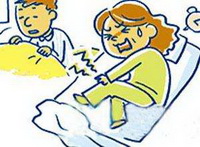 Effective strategies to prevent sleep-related twitches:
✵Wear supportive footwear: Mild muscle twitches may result from physical exertion or biomechanical imbalances. Flat feet or other structural foot issues can predispose some individuals to leg cramps. Properly fitted, supportive shoes can help compensate for such imbalances.
✵Loosen bedding: Many people tuck in their blankets tightly, but this habit may negatively affect sleep quality—especially when lying on the back. Excessive pressure from heavy or tightly tucked bedding can compress the feet and calves, leading to tightening of the gastrocnemius and plantar muscles. Tightened muscles are more prone to spasms; therefore, keeping bedding loose and relaxed is advisable.
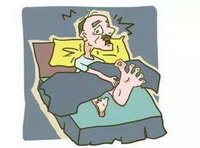 ✵Perform gentle pre-sleep stretching: Light physical activity before bed neither overexerts muscles nor disrupts sleep—in fact, it promotes relaxation. Stretching the gastrocnemius and foot muscles before bedtime can help reduce the likelihood of nocturnal cramps. To stretch the gastrocnemius, stand facing a wall or stair, place the ball of your foot on the edge of the step with your heel hanging off, then slowly lower your heel until you feel a gentle stretch in your calf. Hold for 15–30 seconds and repeat 2–3 times per leg.
✵Maintain appropriate hydration: Staying adequately hydrated supports overall health, including muscle function. However, excessive fluid intake close to bedtime can dilute blood sodium levels (hyponatremia), potentially triggering muscle cramps. Optimal water intake varies depending on activity level, climate, and diet. Because thirst perception diminishes with age, older adults may unintentionally become dehydrated. While concerns about nocturia (frequent nighttime urination) are valid, moderate evening hydration—timed at least 1–2 hours before bed—usually avoids this issue.
✵Maintain regular sleep–wake schedules: Sleep is a restorative physiological state best supported by consistent daily routines. During the day, engage in moderate physical activity—but avoid vigorous exercise too close to bedtime. Regardless of how fatigued you feel, resist the urge to nap excessively during the day, especially after poor nighttime sleep. Instead, rise at the same time each morning—even after fragmented sleep—to reinforce circadian rhythm stability. Consistency over several days typically improves sleep continuity and depth.
Edited and last revised:
