
The Downsides of Watching TV for Too Long: It Harms Your Eyes, Liver, and Skin.
- Introduction.
-
 Introduction: Television is part of recreation in our daily lives; however, viewing time should be moderate. Excessive viewing can damage eyesight. Developing the habit of protecting both eyes and liver is essential for maintaining health.
Watching TV for prolonged periods accounts for two of the “five fatigue-induced injuries to the body” documented in the ancient medical works Huang Di Nei Jing (The Inner Cannon): “prolonged visual fixation injures the liver” and “prolonged sitting injures the muscles.”
- The Downsides of Watching TV for Too Long: It Harms Your Eyes, Liver, and Skin.
-
 ✵Disadvantages of Excessive TV Viewing: Individuals who watch TV for an average of more than three hours per day may develop “TV syndrome.” Studies indicate that approximately 50 diseases are associated with excessive TV viewing. Video display devices—including television screens—can directly affect the eyes, bone marrow, and muscles, and indirectly induce tension and stress. Indoor dioxin pollution has previously been detected in Europe, the United States, and Japan; however, its source and transmission pathway remained unidentified. Recently, researchers discovered that flame retardants inside television sets undergo thermal fission at high temperatures, generating high concentrations of dioxins and other toxic compounds harmful to human health. Dioxins are highly carcinogenic and may cause cardiovascular disease, impaired immune function, endocrine disorders, spontaneous abortion, or abnormal sperm morphology. Meanwhile, dust accumulated inside television sets continuously disperses into the air, forming inhalable particulate matter (PM₁₀), which poses serious risks to human health.
 ✵Tips for Healthy TV Viewing: First, position the television at eye level—its center should align horizontally with your line of sight. The optimal viewing distance is four to five times the height of the screen. While watching, avoid tilting your head upward or lying down; instead, sit upright. During commercial breaks, stand up and move around. Keep a window open while watching TV—even in cold weather—to ensure at least 10 minutes of ventilation per hour, effectively reducing indoor PM₁₀ and dioxin concentrations. Simultaneously, turn on a 5–8 watt fluorescent lamp or desk lamp to reduce screen contrast and visual strain.
Do not watch TV while eating: this not only suppresses appetite but also weakens digestive organ function. Moreover, dioxins exhibit strong adsorption affinity for food, potentially contaminating meals and entering the body via ingestion. Avoid watching TV immediately after meals, as it impairs digestion. After viewing, wash exposed skin with warm water. Clean dust from the television set regularly.
- Benefits of Reduced TV Viewing:
-
 ✵1. Liver and Eye Protection: Prolonged screen gazing causes conjunctival congestion and disrupts retinal photoreceptor adaptation, leading to visual disturbances, autonomic nervous system imbalance, and dry eye syndrome.
✵2. Skin Protection: The TV screen surface accumulates substantial static charge, attracting dust particles that may be propelled toward the face by emitted light. Failure to thoroughly cleanse the face afterward can result in facial hyperpigmentation (e.g., melasma).
 ✵3. Obesity Prevention: TV viewing reduces physical energy expenditure, promoting subcutaneous fat accumulation. Watching TV while eating encourages unconscious overconsumption; even without concurrent eating, viewers tend to snack on high-calorie foods during viewing. Furthermore, televised food advertisements stimulate appetite and increase caloric intake.
✵4. Prevention of Prolonged Sitting: Extended TV viewing impedes venous return from the lower limbs, causing swelling, numbness, and pain. Due to the thin walls of venous vessels, sustained pressure may obstruct blood flow, increasing the risk of deep vein thrombosis—colloquially termed “TV leg.” Prolonged sitting before the screen may also cause coccygeal pain, sometimes radiating to the buttocks and thighs—a condition informally known as “television coccydynia.”
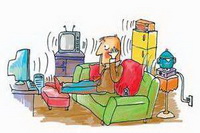 ✵5. Disease Prevention: Statistics show that 40% of individuals who consistently watch TV for over three hours daily experience gastric ptosis, peptic ulcers, or related symptoms—often due to concurrent eating, which disrupts gastric motility. Watching highly stimulating programs may elevate blood pressure or trigger cardiac events. Chinese scientists have reported that television sets and other visual/radiological devices emit low-level electromagnetic energy; prolonged exposure in poorly ventilated rooms may elevate cancer risk. Additionally, extended sedentary TV viewing restricts blood circulation, diminishes physical agility, and gradually weakens disease resistance and immune function—increasing susceptibility to common colds.
✵6. Prevention of Precocious Puberty: A recent study found that children with high TV exposure produce significantly less melatonin than peers; reduced melatonin levels correlate with earlier onset of puberty.
 ✵7. Get enough sleep: Television is the number one cause of chronic sleep deprivation, followed by reading in bed, according to a U.S. survey. An addiction to late-night television leads to daytime drowsiness, resulting in a significant decline in sexual desire among one-quarter of Americans.
✵Tips: Watching TV can impair eyesight, and drinking alcohol can cause ocular congestion and increase the risk of optic nerve damage; doing both simultaneously is tantamount to adding fuel to the fire—causing severe harm to vision, potentially even blindness.
Edited and last revised:
