
How often should you wash your hair for optimal health? The correct way to wash your hair.
- Introduction.
-
 Introduction: Hair cleanliness is the foundation of healthy, beautiful hair. Therefore, determining how frequently to wash your hair, selecting the appropriate shampoo, and understanding how to choose one suited to your scalp and hair type are essential.
 The World Health Organization lists “clean, shiny, dandruff-free hair” as one of its key health indicators. Healthy, beautiful hair should be clean and neat, free of dandruff, lustrous, elastic, of moderate thickness, minimally split-ended, and evenly distributed and dense. To achieve healthy, beautiful hair, proper hair care knowledge is vital. Washing hair removes scalp sebum, dead skin cells, and environmental debris; it stimulates the scalp—providing a mild massage-like effect—that supports hair follicle health and promotes hair growth. Thus, proper hair washing is the most critical first step in hair care.
- How often should you wash your hair?
-
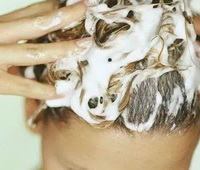 In ancient times, people washed their hair infrequently. As civilization and living standards advanced, hair-washing frequency increased. According to trichological research, even daily hair washing causes minimal damage to healthy hair. However, like skin, hair is classified by sebum secretion and moisture content into dry, neutral (normal), and oily types—and each requires a different washing frequency. Generally, dry and neutral hair types benefit from washing once or twice per week; oily hair may require washing three to four times weekly. Additionally, seasonal changes, occupation, and environmental exposure influence optimal frequency. For example, during summer—when sweating and sebum production increase—or for individuals engaged in outdoor labor or dusty industrial environments, washing frequency may be appropriately increased. In contrast, those working indoors during winter may extend the interval between washes.
 ✵How to wash your hair correctly
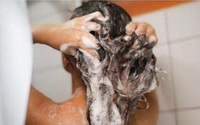
Water temperature should be neither too cold nor too hot; warm water around 40°C is ideal. First, thoroughly soak the hair. Pour a small amount of shampoo into your palm, lather it by rubbing your hands together, then gently apply it to the hair. Using your fingertips—not nails—massage the scalp and hair roots with gentle, circular motions. Avoid aggressive scratching or rubbing. For the hair ends, gently pinch and knead them with your fingers. After thorough cleansing and scalp massage, rinse thoroughly with warm water. Gently blot excess moisture with a soft towel—do not rub vigorously. Finally, use a hair dryer to dry hair until approximately 80% dry.
 ✵How to choose shampoo?
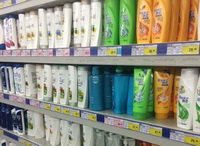
The primary difference among shampoos lies in their cleansing strength. Shampoos sold on the general market are typically labeled for use on neutral, oily, or dry hair—or for damaged hair. Therefore, you should select a shampoo suited to your hair type—one that is high-quality, mild, low-irritancy, and effective. For example, individuals who prefer a refreshing sensation—or those frequently exposed to dust—may benefit from an oil-control shampoo. For patients with seborrheic dermatitis, seborrheic alopecia, scalp pityriasis, or other scalp conditions, medicated shampoos (bar or liquid formulations) specifically designed to treat these symptoms are recommended. In the past, some shampoos had highly alkaline pH levels; however, with technological advances, modern premium shampoos are formulated to be gentle, non-irritating to the scalp—even with daily use—and contain hair-conditioning ingredients that help protect the cuticle (the outermost layer of the hair shaft), minimizing damage caused by brushing and friction.
- Hair type reference guide:
-
 ✵If your hair meets most of the following criteria, it is likely neutral:
(1) Neither excessively oily nor dry;
(2) Neither permed nor chemically dyed;
(3) Holds styles well;
(4) Appears naturally shiny and healthy most of the time.
✵If your hair meets most of the following criteria, it is likely oily:
(1) Hair feels soft and limp;
(2) Individual strands appear flat and fine;
(3) Styling is difficult and combing is challenging;
(4) Hair becomes greasy shortly after washing.
✵If your hair meets most of the following criteria, it is likely dry:
(1) Hair lacks luster and feels dry, rough, or brittle;
(2) Hair tangles easily and is difficult to comb;
(3) Hair has undergone chemical treatments (e.g., perming, bleaching, dyeing);
(4) Hair is curly and prone to split ends.
Edited and last revised:
